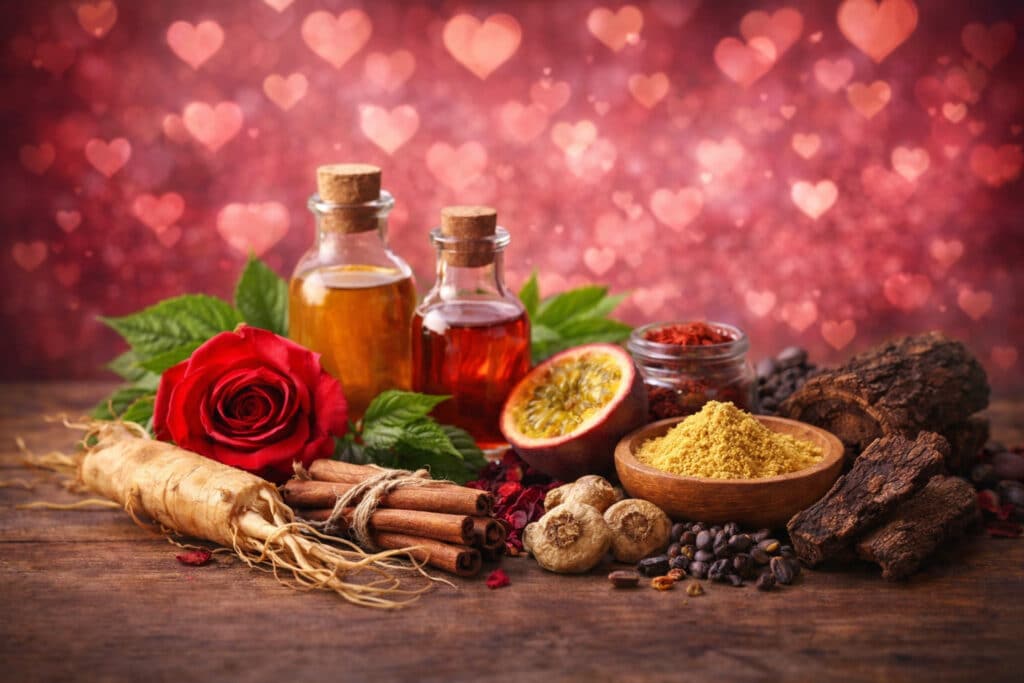
Aphrodisiac herbs for Valentine’s Day: connection, energy and sensuality
Rianne Gerrits
Facebook
Twitter
LinkedIn
WhatsApp
Reddit
5 min read
Table of contents
Around Valentine’s Day, many people reflect on love, intimacy, and connection with themselves or a partner. In addition to traditional romantic symbols such as chocolate and flowers, there are also botanical herbs that have been associated with sensory experience and passion for centuries. These herbs are often referred to as aphrodisiac herbs and are part of the broader group of botanical herbs that can have a gentle influence on the experience of sensuality and zest for life[3].
Although these herbs are not a panacea, some people find that they make a subtle contribution to their experience of intimacy, relaxation and emotional connection. In this article, we explain what aphrodisiac herbs are, where they come from, what people say about them, and why they receive extra attention around Valentine’s Day.
Aphrodisiac herbs do not have a guaranteed effect, but are traditionally used to support atmosphere, sensory experience and connection.
What are aphrodisiac herbs?
Aphrodisiac herbs are herbs or plants that are traditionally used to stimulate the senses or to support a feeling of romance, energy and vitality. The term “aphrodisiac” is derived from Aphrodite, the Greek goddess of love and desire, with which the idea of love and passion has been linked for centuries.
What does aphrodisiac mean in simple terms?
The word “aphrodisiac” can be found in various cultures and stories. It refers to natural ingredients — usually plants or herbs — that are thought to support the experience of sensuality, intimacy and passion. This may include herbs that are used in tea, elixirs, aromas, or as part of rituals around romantic moments[4].
Where does the concept come from?
The term aphrodisiac dates back to classical antiquity. Stories from Europe and parts of Africa and Asia describe various plants and spices that were associated with love and passion. Some cultures combined these herbs with rituals to enhance the senses and emotions [2].
What aphrodisiac herbs are not
Aphrodisiac herbs are not medicines and not medical treatments. There is little scientific evidence that they always work as stories or traditions suggest. What someone experiences is highly personal and may differ from person to person. Aphrodisiac herbs are more to be seen as traditional, cultural or experiential approaches, not as guaranteed solutions for emotional or relational problems [1].
Why do people use aphrodisiac herbs?
People mention different reasons why they are interested in aphrodisiac herbs. These reasons vary per person and say nothing about guaranteed effects.
Moral or symbolic meaning For many people, aphrodisiac herbs have a romantic or cultural meaning — they symbolize connection and passion.
Sensory experience Some users mention that certain herbs seem to stimulate the senses. For example, through smell, taste or the experience of drinking or sharing something together around Valentine’s Day.
Joint experience The use of herbs during romantic moments can contribute to a ritual or atmosphere, such as drinking a warm herbal tea together for an intimate evening.
How are these herbs described?
Sensory stimulation
Experiences from stories often mention that certain herbs help to awaken the senses — for example, through fragrant tea or aromatic spices that influence the atmosphere.
Relaxation and presence
Some herbs are associated with relaxation, which can make you more open to contact and connection. This can help to reduce stress and be more present in the moment.
Connection and energy
Stories also mention that aphrodisiac herbs can support a feeling of energy, vitality and emotional openness, which fits in with the experience of romance and intimacy.
Lorem ipsum dolor sit amet, consectetur adipiscing elit. Ut elit tellus, luctus nec ullamcorper mattis, pulvinar dapibus leo.
The role of context and expectation
How someone experiences a herbal experience can be strongly influenced by the context — the place, the mood and the expectation that someone has in advance. This means that the same herbs can be experienced differently by different people, and that your experience sometimes has as much to do with atmosphere as with the herb itself.
The experience with aphrodisiac herbs is not only determined by the herb itself, but especially by intention, setting and personal sensitivity. Expectation and atmosphere play a major role in this.
What science does and does not say
There are many traditional and cultural stories about aphrodisiac herbs, but there is little conclusive scientific evidence that they always work to enhance libido, lust or romantic connection. Some studies mention possible physiological or circulation-related effects with certain herbs, but this has not been generally proven and differs per person [1].
Why a 'good' dosage is personal
body and health
sensitivity to taste and smell
experience with herbs or rituals
mood and context in which it is used
Therefore, everyone reacts differently to the same amount.
Disclaimer
This information is for informational purposes only and does not replace medical advice.
Frequently Asked Questions
Do aphrodisiac herbs always work?
No. There is no guarantee that they will have the same effect on everyone. What some people experience differs from person to person.
Can I combine them with other resources?
Combining herbs with other substances can influence your experience. Be aware of what you are combining.
Are these herbs safe to use?
Many herbs are generally available and safe as part of a diet or as tea, but individual sensitivity may differ.
Can I use aphrodisiac herbs without a partner?
Yes. Some people use these herbs for self-experience, relaxation or personal rituals.